
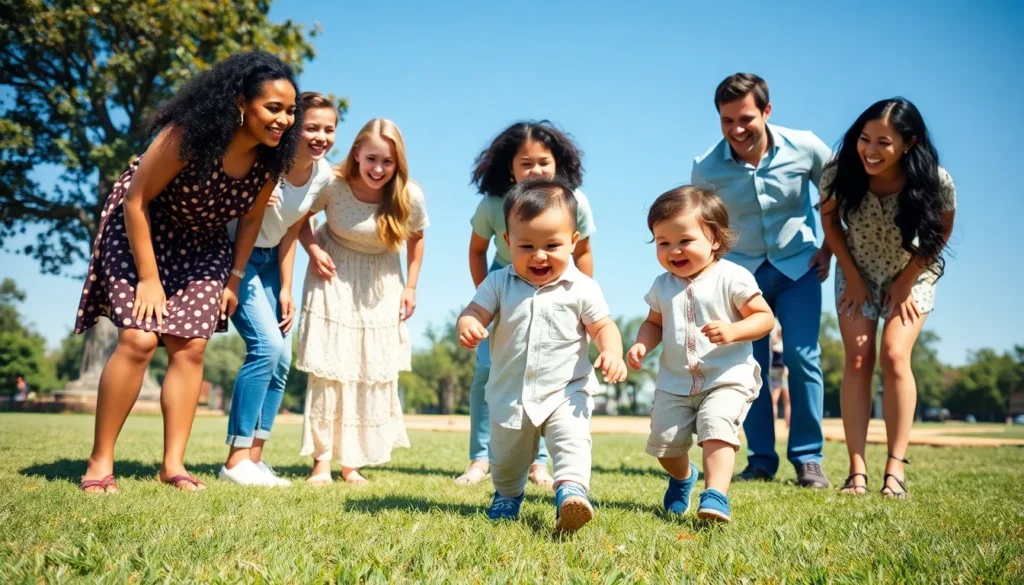
Every parent knows that watching a child grow is like being on a rollercoaster ride—thrilling, unpredictable, and sometimes a little nauseating. Childhood milestones are those magical moments that mark a child’s journey from babbling baby to curious toddler. They’re not just benchmarks; they’re the quirky highlights of parenting, where every first step feels like an Olympic event and the first word can bring tears of joy (and maybe a bit of embarrassment).
From the first wobbly steps to the epic battle of potty training, these milestones shape a child’s development and create lasting memories. Understanding these stages not only helps parents feel more connected but also adds a sprinkle of humor to the chaos. So buckle up and get ready to explore the delightful world of childhood milestones—where every giggle, stumble, and tantrum tells a story worth sharing.
Overview of Childhood Milestones
Childhood milestones signify critical stages in a child’s development. These markers, ranging from physical to cognitive achievements, play a vital role in shaping future growth. Parents often anticipate milestones, tracking events like the first step or first word with excitement.
Physical milestones include gross motor skills, such as walking or running. Fine motor skills, such as grasping objects or scribbling, develop alongside these larger movements. Cognitive milestones involve problem-solving, language acquisition, and memory. Social milestones include interactions with peers and the demonstration of empathy.
Milestones occur in a sequence, providing a framework for normal development. At one month, infants respond to voices and track movements. By six months, they begin to sit up independently and reach for objects. At twelve months, many take their first steps and say simple words.
Language development progresses from cooing to forming simple sentences by age three. The first three years often entail rapid changes, with children growing increasingly independent. Their curiosity propels them to explore and learn about the world around them.
Tracking these milestones can help identify developmental delays early. Assessing progress through regular check-ups ensures that children receive necessary support. Resources such as pediatricians and developmental screening tools assist parents in navigating this journey.
Understanding milestones fosters stronger bonds between parents and children. Celebrating achievements, both big and small, creates lasting memories and encourages further development.
Physical Development Milestones
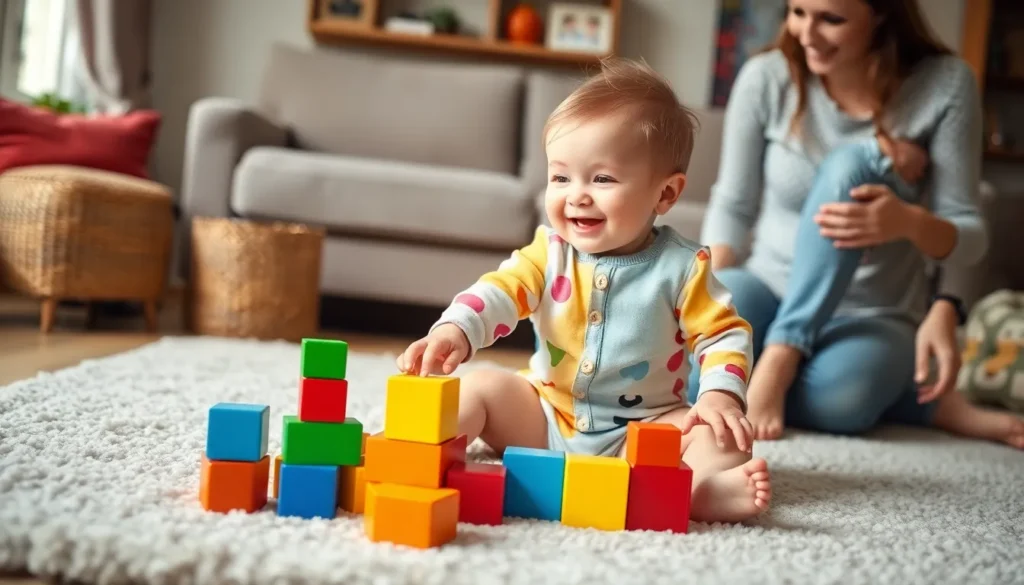
Physical development milestones are essential markers in a child’s growth journey. These achievements reflect their ability to navigate the world and interact with their environment.
Gross Motor Skills
Gross motor skills involve large muscle movements that ensure children can control their bodies. From six months, infants begin to sit without support. Crawling appears around eight to ten months, while standing usually develops around twelve months. Walking independently often occurs between nine to fifteen months. Engage toddlers in activities like running and jumping, promoting further development. Parents can support progress by providing safe spaces for movement and exploration.
Fine Motor Skills
Fine motor skills focus on the use of small muscles, particularly in the hands and fingers. Children achieve grasping objects around three months. By twelve months, they may transfer items between hands and use a pincer grasp to pick up small objects. Skills like stacking blocks and scribbling develop between fifteen and eighteen months. Involvement in activities such as coloring and playing with small toys enhances dexterity and hand-eye coordination. Encouragement in these tasks fosters confidence and further skill refinement.
Cognitive Development Milestones
Cognitive development milestones reflect critical changes in a child’s ability to think and understand the world. Recognizing these milestones enables parents to support their child’s growth effectively.
Language Acquisition
Language acquisition occurs in a predictable sequence, with significant advancements in early childhood. By six months, infants typically start babbling and experimenting with sounds. At about twelve months, many children say their first words, often referring to family members or familiar objects. Around eighteen months, vocabulary expands rapidly, with many children saying about ten words and beginning to combine them into simple phrases. This stage highlights the importance of verbal communication as children learn to express their needs and emotions.
Problem-Solving Skills
Problem-solving skills develop gradually as children explore their environment. At twelve months, many infants demonstrate curiosity by investigating how objects work. By fifteen months, toddlers often experiment with different strategies, such as stacking blocks or fitting shapes into corresponding slots. Around two years of age, children engage in more complex problem-solving, including simple puzzles and overcoming obstacles. Encouraging exploration enables children to develop confidence in their ability to solve challenges independently.
Social and Emotional Development Milestones
Social and emotional development milestones are vital in shaping a child’s interactions and feelings. These milestones provide insight into how children connect with others and manage their emotions.
Building Relationships
Building relationships starts early in life. By six months, babies often smile at familiar faces, showcasing early social engagement. Infants typically display interest in others by nine months, understanding social cues like turning heads and cooing. At twelve months, many children initiate interactions, seeking approval or attention from caregivers. As they grow, toddlers become more adept at forming friendships, sharing toys, and engaging in parallel play by eighteen months. These interactions lay the foundation for future social skills.
Emotional Regulation
Emotional regulation develops progressively throughout early childhood. Around twelve months, children begin expressing simple emotions, such as joy and frustration. By eighteen months, toddlers often show empathy, recognizing feelings in others and responding accordingly. Encouraging them to label their emotions supports this development. Children around two years old might demonstrate better self-soothing techniques, using methods like hugging a stuffed animal when upset. These milestones indicate a child’s ability to manage emotions, fostering resilience and emotional intelligence in later years.
Importance of Tracking Milestones
Tracking childhood milestones significantly influences early development. Parents gain insights into their child’s growth patterns by observing these milestones. Identifying delays early leads to timely interventions, which can make a substantial difference in a child’s progress.
Physical milestones, like walking and grasping, indicate a child’s motor skills development. Monitoring these achievements provides clarity on physical health. Understanding cognitive milestones helps parents recognize language and problem-solving skills, emphasizing their child’s mental growth.
Social and emotional milestones are equally important. Observing a child’s ability to connect with others offers valuable perspectives on their emotional intelligence. Tracking social interactions promotes awareness of a child’s ability to form relationships, necessary for future growth.
Celebrating milestones, big or small, strengthens the parent-child bond. Celebrations foster encouragement, fueling a child’s desire to take on new challenges. Parents build confidence in their children by acknowledging achievements, motivating them to pursue further developmental goals.
Documenting milestones creates a personal record for families. Such records become cherished memories, showing a child’s growth journey over time. By keeping track of milestones, parents participate actively in their child’s development, supporting their unique path.
Childhood milestones represent more than just developmental markers; they encapsulate the emotional highs and lows of parenting. Each achievement is a stepping stone that strengthens the bond between parents and children. By celebrating these moments and tracking progress, parents can foster an environment that encourages growth and exploration. Understanding the nuances of physical, cognitive, and social-emotional milestones equips parents with the tools to support their child’s journey. As they navigate this rewarding yet challenging path, parents can take pride in every small victory, knowing it contributes to their child’s overall development and well-being.