
Gross motor skills are the unsung heroes of movement. They’re the reason kids can run, jump, and climb without resembling a newborn giraffe. These skills involve the large muscles in the body, enabling activities like walking, throwing, and dancing—yes, even that questionable dance move at the family wedding.
Understanding Gross Motor Skills
Gross motor skills involve the coordination of large muscles for movement. These skills allow children to engage in activities that promote physical health and development.
Definition of Gross Motor Skills
Gross motor skills refer to the abilities that involve the use of large muscle groups for whole-body movement. Examples include actions such as crawling, walking, running, and jumping. These skills develop through practice and play, becoming more refined as a child ages. By mastering gross motor skills, children gain better control over their bodies and enhance their overall physical performance.
Importance of Gross Motor Skills
Gross motor skills play a vital role in a child’s physical development. These skills support everyday tasks like climbing stairs and riding a bicycle. Engaging in activities that develop gross motor skills fosters confidence and independence. Children who possess strong gross motor skills often find social interactions more enjoyable, as they can participate in group sports and games. Additionally, these skills contribute to overall fitness and well-being, laying the foundation for a healthy lifestyle.
Development of Gross Motor Skills
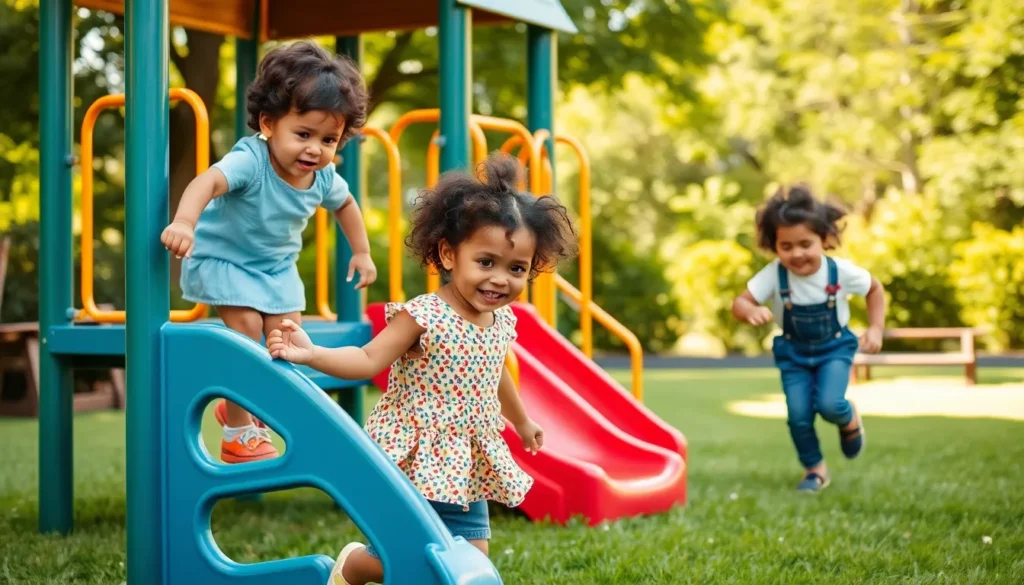
Gross motor skills develop through various milestones during childhood. These skills progress as children engage in physical activities, promoting movement and coordination.
Milestones in Early Childhood
Developmental milestones for gross motor skills occur in stages. By 2 months, infants typically begin to lift their heads when lying on their stomachs. At 6 months, they often roll over and sit with assistance. Crawling usually starts between 7 and 10 months, providing mobility for exploration. By age 1, children may take their first independent steps. By 2 years, many kids can walk, run, and jump, showcasing significant improvement. Ages 3 to 5 bring more complex skills, such as hopping and climbing, indicating well-developed coordination.
Factors Influencing Development
Various factors influence the development of gross motor skills. Genetics play a significant role in determining a child’s physical capabilities. Environmental support, including safe play areas, impacts the frequency and variety of physical activities. Nutrition also affects growth, as essential nutrients support muscle development and energy. Parental involvement encourages practice through games and outdoor activities. Additionally, the presence of peers stimulates social play, further enhancing gross motor skills. Each contributing factor helps shape a child’s overall abilities.
Activities to Enhance Gross Motor Skills
Engaging in various activities enhances gross motor skills through enjoyable methods.
Play-Based Approaches
Children benefit from play-based activities that promote movement and coordination. Games like tag encourage running and agility, while obstacle courses improve balance and strength. Using playground equipment fosters climbing skills and encourages social interaction among peers. Dancing combines rhythm with movement, supporting coordination and spatial awareness. Incorporating sports like soccer or basketball enhances skills like kicking and throwing. Setting aside time for unstructured play allows kids to explore their physical abilities freely, promoting creativity and confidence in movement.
Structured Exercises
Structured exercises offer targeted ways to build gross motor skills. Activities such as jumping jacks improve overall body coordination and fitness. Balance beam exercises help develop stability and confidence in movement. Incorporating ball skills, like throwing and catching, enhances hand-eye coordination. Bike riding supports balance and muscle strength, making it a fun option for children. Yoga poses can improve flexibility and body awareness while promoting relaxation and focus. By incorporating these structured exercises into a child’s routine, parents can significantly improve their child’s gross motor skill development.
Challenges in Gross Motor Skills Development
Gross motor skills development faces several challenges during childhood. Delays and disorders can affect a child’s ability to master these essential skills.
Common Delays and Disorders
Several conditions can hinder gross motor skills. Developmental coordination disorder affects coordination and movement control. Cerebral palsy impacts muscle tone and movement abilities. Additionally, autism spectrum disorder may influence gross motor development alongside other social skills. Children with these disorders often require tailored interventions to support their physical development.
Tips for Parents and Educators
Parents and educators play a crucial role in fostering gross motor skills. Integrating regular physical activities helps support skill development. Structures like obstacle courses motivate children to engage in movement. Encouragement during play enhances confidence and fosters independence. Observing children’s movements allows adults to identify specific areas for improvement. Providing specific feedback helps children refine their skills while ensuring enjoyment in the process.
Gross motor skills are vital for children’s physical development and overall well-being. They enable children to engage in a variety of activities that promote fitness and social interaction. By encouraging active play and providing supportive environments, parents and educators can significantly enhance these skills.
Addressing any challenges that may arise ensures that every child has the opportunity to develop their gross motor abilities. Investing time in fun and engaging activities not only builds physical competence but also fosters confidence and independence. Ultimately, nurturing gross motor skills lays a strong foundation for a healthy and active lifestyle.