
When it comes to choosing the right educational path for children, parents often find themselves at a crossroads. On one side, there’s the structured world of public schools, where bells dictate the rhythm of learning. On the other, the enchanting realm of Montessori, where kids become little explorers in their own right. So which one wins the education showdown?
Overview of Montessori Education
Montessori education emphasizes child-centered learning. Developed by Dr. Maria Montessori, this approach fosters independence and curiosity in children.
Philosophy and Principles
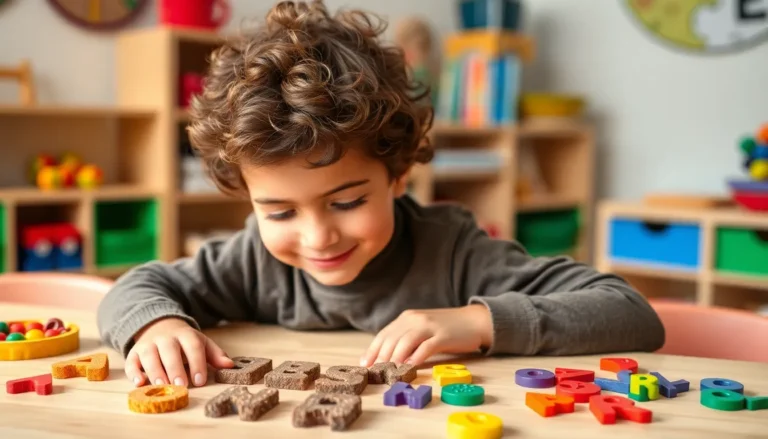
Montessori education centers on respect for the child, promoting intrinsic motivation. Each classroom encourages exploration, allowing students to learn at their own pace. Teachers act as guides rather than traditional instructors, nurturing a love for learning through self-directed activities. Children engage with materials that facilitate hands-on experiences, aligning with their interests. Mixed-age classrooms support social interaction, fostering community and cooperation among peers. The philosophy underscores the critical role of environment, as it directly impacts a child’s ability to learn and grow.
Curriculum and Learning Environment
Montessori curriculum focuses on individualized learning experiences. Students choose activities from a variety of subjects, appealing to different learning styles. Practical life skills hold significant importance, incorporating daily tasks that develop independence. The learning environment is carefully organized, consisting of materials that encourage exploration. Resources include sensory tools, art supplies, and nature studies, all designed to enhance knowledge retention. Each classroom space promotes collaboration and creativity, facilitating discussions and group projects. The overall atmosphere nurtures curiosity and encourages students to take ownership of their education.
Overview of Public School Education

Public school education serves as a cornerstone of the American educational system. This system aims to provide accessible education for all children, regardless of socioeconomic status.
Structure and Curriculum
Structure and curriculum in public schools follow state-mandated guidelines. Public schools offer a standardized curriculum that includes core subjects like math, science, English, and social studies. Grade levels typically dictate how subjects are taught, ensuring children progress systematically. Extracurricular activities, such as sports and arts programs, enrich the academic experience. Most public schools also adhere to federal standards and assessments to evaluate student performance, ensuring accountability across the system.
Teacher Qualifications and Standards
Teacher qualifications in public schools integrate state licensing requirements. Educators must hold specific degrees and complete certification processes. Continuous professional development ensures teachers stay current with educational best practices. Standards for teacher effectiveness hinge on performance evaluations, which often include classroom observations and student progress metrics. Public school teachers work in varied classroom environments, allowing for diverse teaching methodologies based on student needs and school resources.
Key Differences Between Montessori and Public School
Montessori and public schools exhibit distinct differences in their educational approaches and structures.
Approach to Learning
Montessori education encourages hands-on, self-directed learning. Children explore topics at their own pace, fostering independence and curiosity. In Montessori classrooms, educators function as guides rather than traditional lecturers. This model supports personalized learning experiences, allowing students to choose activities that align with their interests. Public schools follow a more structured curriculum, adhering to state standards and grade-level expectations. Core subjects receive equal emphasis, but students often navigate a more rigid schedule. Teachers typically deliver lessons to entire classes, focusing on standardized content.
Class Size and Student-Teacher Ratio
Class sizes in Montessori settings tend to be smaller, often consisting of mixed-age groups. These smaller classes enable personalized attention, enhancing student engagement and learning. The student-teacher ratio generally favors more individual interaction, allowing educators to understand each child’s unique learning style. Public schools, in contrast, may have larger classes, resulting in higher student-teacher ratios. While this can limit individual attention, public schools offer resources to accommodate diverse learning needs. Larger class sizes may challenge teachers to provide personalized support, but they also facilitate collaborative learning among peers.
Pros and Cons of Montessori Education
Montessori education has distinct advantages and disadvantages that parents should consider when evaluating this approach.
Advantages
Montessori education fosters independence in children. By allowing students to choose their activities, it cultivates intrinsic motivation and a love for learning. Smaller class sizes promote personalized attention, enabling teachers to tailor instructional strategies to individual learning styles. The multi-age environment encourages collaboration and peer learning, enriching social development. Hands-on materials enhance engagement, making abstract concepts more tangible. Flexibility in curriculum empowers children to explore their interests deeply. Overall, the focus on practical life skills equips students with valuable tools for everyday challenges.
Disadvantages
Montessori education might not provide the structure some children require. For families seeking a more standardized approach, this flexibility can be disorienting. Limited access to resources in some Montessori schools can affect the variety of materials and activities available. Additionally, transitions to traditional schooling may prove challenging if students are unfamiliar with standard grading and testing systems. Some critics argue that the lack of emphasis on standardized assessments may impact college preparation. Enrollment can also be competitive, making access difficult for some families.
Pros and Cons of Public School Education
Public school provides a structured education option for many families, emphasizing accessibility and standardized learning experiences. While its merits and drawbacks vary, understanding them can assist parents in making informed decisions.
Advantages
Public schools offer broad access, ensuring that all children receive education regardless of background. Standardized curricula cover essential subjects, providing a comprehensive foundation. Extracurricular activities, like sports and arts, enrich students’ experiences and promote teamwork. Additionally, certified teachers are equipped with best practices, fostering student learning through evidence-based methods. Community engagement remains a key aspect as public schools often involve families and local organizations in the educational process.
Disadvantages
Class sizes in public schools can be large, which may limit personalized attention for students. Standardized testing often dictates the pace and focus of learning, potentially stifling creativity and critical thinking. Budget constraints may lead to resource limitations and overcrowded classrooms. Additionally, the emphasis on uniformity can deter innovative teaching methods, making it challenging for educators to address diverse learning styles. Transitioning to advanced education can pose difficulties when preparation does not align with individual student needs.
Choosing between Montessori and public school education presents a significant decision for parents. Each approach offers distinct benefits and challenges that cater to different learning styles and family values. Montessori education champions independence and personalized learning, while public schools provide structured environments with a focus on standardized curricula.
Ultimately, the right choice hinges on a child’s unique needs and the family’s educational philosophy. By weighing the advantages and disadvantages of each system, parents can make informed decisions that align with their child’s growth and development.